
Pedagogical foundations
Designed to support you and transform your school’s teaching culture, tekman’s educational programs align with current research and advances in pedagogical innovation.
Competency-based learning and active methodologies:
programs that build competent students
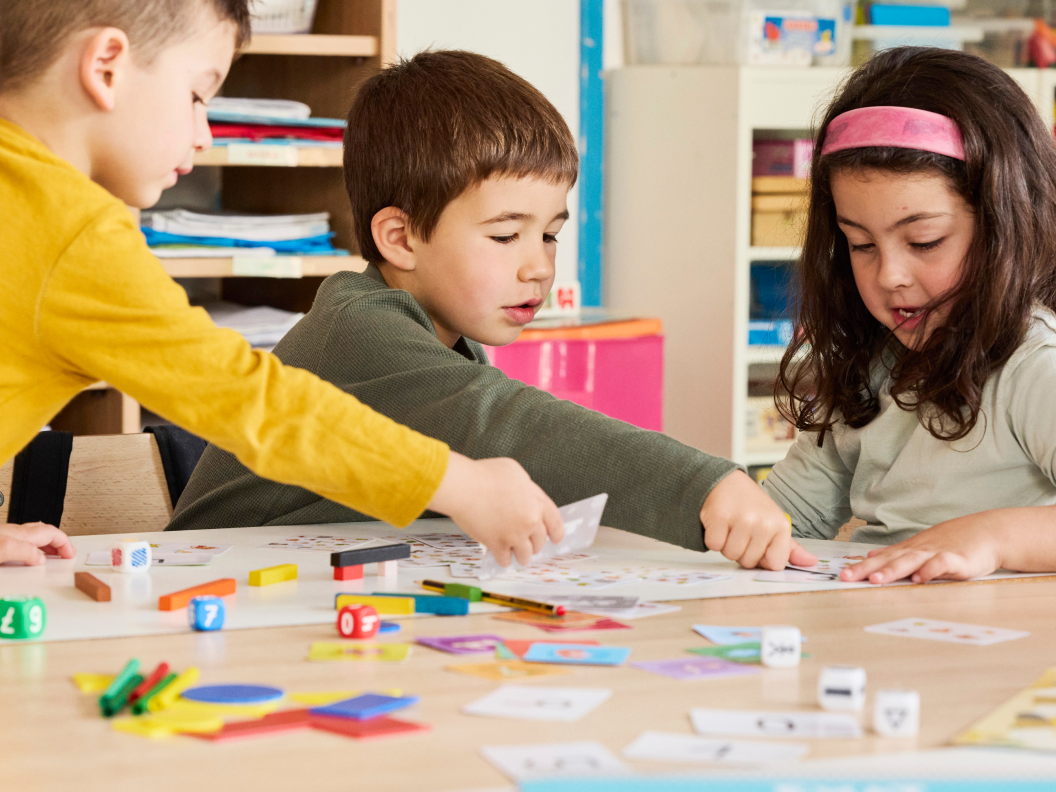
Competent students use their knowledge and skills strategically to solve everyday problems.
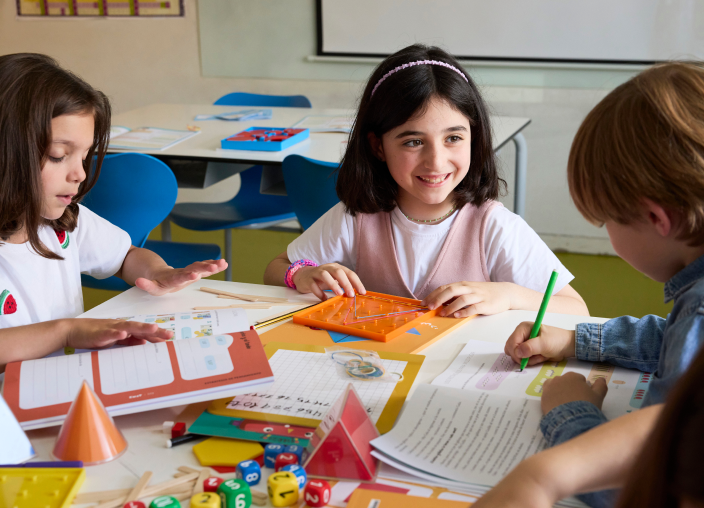
To prepare children for the real world, teaching must focus on key competencies, assessed through performance descriptors that reflect the skills and knowledge students need to achieve.
At tekman Education, as specialists in math and language teaching, we offer programs designed to help students connect what they learn to their own lives and become critical, free, and competent individuals.
01
The heart of our programs
Our educational approach is solid and backed by educational foundations and research in teaching and learning, with active methodologies that include contextualized activities and authentic projects. The programs offer a competency-based approach, classroom resources, ongoing professional learning, and specialized consulting for teachers.
We work with learning situations in which students learn by doing, researching, cooperating, experimenting, and connecting knowledge through emotion and reflection.

-
Continuity across stages
-
Active learning methodologies
-
LOMLOE: 100% adapted to each autonomous community
-
Manipulative materials and digital resources
-
Continuous teacher training
-
Specialist pedagogical advisors
-
Universal Design for Learning (UDL)
Competency-based learning
We propose learning based on contextualized activities that let students apply what they’ve learned at different times and in different areas of life, developing not only knowledge but also personal and social skills and attitudes linked to the eight key competencies.
-

Literacy competency
The ability to communicate orally and in writing, adapting to context and register. -
Multilingual competency
The ability to understand and communicate in a foreign language, also exploring its culture to promote linguistic diversity. -
Mathematical competency and in science, technology and engineering
Building math skills to ask the right questions and solve everyday problems with a critical attitude toward the data at hand. -
Digital competency
Learning to identify reliable sources and use online information critically and responsibly. -
Personal, social, and learning-to-learn competency
Building lifelong learning from an early age, with approaches like PBL that encourage active inquiry, learning, and cooperation. -

Citizenship competency
Developing this competency promotes collaboration, emotional intelligence, and social responsibility throughout life. -
Entrepreneurship competency
Entrepreneurship builds values such as initiative, creativity, and perseverance, which are essential in education and in life. -
Cultural awareness and expression competency
Valuing, appreciating, and understanding culture enriches everyday life. Activities such as visiting museums or analyzing works of art strengthen this competency.
03
Teaching for an inclusive school
Essential to ensuring that all students, regardless of their characteristics, abilities, or needs, have access to a high-quality education. Explore each program’s specific tools for addressing diversity in the classroom.
With our programs, you can:

Personalize instruction
Use a variety of materials
Encourage cooperation
Assess flexibly
04
Methodology
We propose methodologies with an adapted instructional sequence that follows the principles of Universal Design for Learning (UDL), featuring activities born in the classroom, strategies grounded in educational neuroscience research, and topics that resonate with students.
At tekman, we believe it is essential to foster a culture of thinking, which aims to teach students how to think in order to improve problem solving and decision-making. Although we all know how to think, this skill needs to be developed in the right environment, the classroom, through thinking strategies and routines.
- Thinking strategies promote metacognition and help students reflect, analyze, compare, and solve problems, supporting deep, transferable learning. They are applied with guidance and help students become aware of how they learn and make decisions.
- Thinking routines, for their part, make student thinking visible through questions or statements. They help students organize ideas, identify needs, and understand the process they followed to reach conclusions. Like strategies, they should be practiced in class with teacher support.
We see assessment as a tool for improving learning, not just for measuring results. Traditional assessment, focused solely on results and content knowledge, neither reflects students’ real progress nor drives their growth.
That’s why we champion competency-based assessment, aligned with our methodology. This approach makes it possible to assess not only what students know, but also their skills, attitudes, and values, encouraging them to apply what they’ve learned in real-world contexts.
We also promote ongoing, formative, and transparent assessment that includes tools such as self-assessment and peer assessment, involving students in reflecting on their own process. As teachers, we must foster a culture of assessment in the classroom that supports learning to learn and personal growth, preparing students to face new challenges independently and with critical thinking.
Problem-based learning engages students in solving authentic, challenging problems in which they explore relevant information to find solutions, fostering critical analysis, collaboration, and the practical application of knowledge. Through inquiry and decision-making, they develop valuable competencies while tackling real situations, which leads to deep, lasting learning and equips them to take on complex challenges in their lives.
Cooperative learning is another cross-cutting pillar of our programs. We strengthen individual accountability to the group, peer interaction, interpersonal skills, peer assessment, and self-assessment. Students take charge of their own learning, and the teacher acts as a guide, creating situations where students discover things for themselves and learn through firsthand experience.
All our Early Childhood and Primary programs use play-based learning as a cross-cutting methodological approach, because play is the natural way children learn. Through play, students develop a range of skills and competencies in a safe and motivating way, which leads to more effective learning. When children feel emotionally comfortable and happy, learning becomes easier and more meaningful. In short, learning that sparks positive emotions has a deeper, longer-lasting impact.
Hands-on learning involves using tangible objects, manipulatives, and practical activities to support students’ learning. Instead of relying only on verbal or visual information, it lets students interact directly with materials and experience concepts physically and practically. Working with manipulatives allows students to engage with concepts directly, which improves their understanding, retention, and application of knowledge. It actively engages students, supports deep understanding, stimulates critical thinking, connects concepts to real life, caters to different learning styles, improves information retention, and ensures inclusion and adaptation to each child’s individual needs.
Engaging students in practical, meaningful projects that tackle real-world problems fosters deep understanding, critical thinking, collaboration, and self-directed learning. Through project-based learning, students develop transferable skills such as problem solving, communication, and teamwork while applying knowledge in real contexts. Projects make learning relevant and motivating for students, preparing them to face real-world challenges and develop essential skills for personal and professional success.
We also offer different learning opportunities in terms of space. Learning isn’t confined to a classroom; it’s part of our surroundings and our everyday lives. That’s why we encourage making use of every space in the school and the local area, whenever possible, so students can learn through firsthand experience.