
Why reading aloud matters at every age
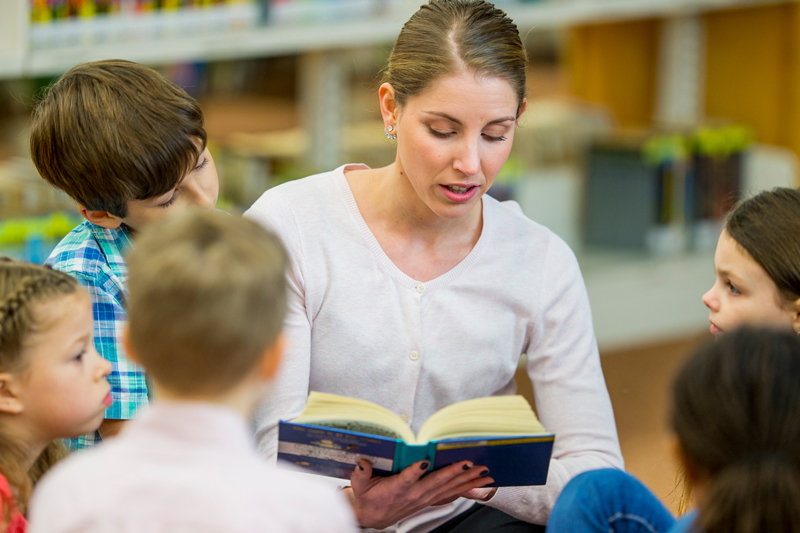
When should we stop reading aloud to students? Never! Science says so. Reading aloud is a widely used strategy in Early Childhood and in 1st–2nd grade. However, as students move up through the grades, we stop reading to them, and we lose many of its benefits. Today we’ll look at why it’s a good idea to keep reading aloud at every stage.
3 benefits of reading aloud
In the article ‘Why you should read this out loud’, Sophie Hardach mentions some of the general benefits of reading aloud, such as the fact that we remember texts and words better when we read them aloud than when we read silently. Focusing more on the classroom experience, Anna Forés, David Bueno, and Antonio Ruiz explain in their book La lectura en voz alta: sus beneficios. Un descubrimiento (fascinante) desde la neuroeducación (Reading aloud and its benefits: a fascinating discovery from educational neuroscience) that sharing read-aloud time with children in class helps with:
- Somatosensory integration, which makes learning have a greater impact on the brain, so we remember it better and can use it more efficiently.
- Building emotional bonds and working on emotions.
- Strengthening theory of mind, which allows for greater empathy and the maturation of executive functions.
These benefits appear both at an early age and in the upper grades. Reading aloud is good at every age! To learn more about the topic, you can watch our interview with Anna Forés: Reading aloud and other discoveries from educational neuroscience.
When the teacher reads to students: moments and strategies
In Ludiletras and Superletras, our Primary language arts programs, we schedule read-aloud times when the teacher reads to the students. Even in 5th and 6th grade!
Lessons where the teacher reads have a different goal from those where students read, either on their own or aloud to their classmates. When the teacher reads, it’s a good idea to find a cozy space where the teacher sits in front of the students and there are no distractions.
This strategy is based on the teacher reading aloud, and children don’t need to follow along in their books; they just listen and enjoy. This develops active listening, careful observation, sustained attention, and respect. It also improves comprehension, thanks to the teacher’s modeling as a reader, which helps students internalize the language and structures they will later use themselves (pauses, voice inflection, etc.), and it builds vocabulary, since listening comprehension is higher than reading comprehension. As you can see, it does a lot for students’ skills!
More information and tips for encouraging reading
If you’re interested in strategies for reading comprehension and encouraging reading, don’t miss these articles and resources:
- How to build the reading habit in Primary
- PISA tests: competency-based teaching strategies to improve reading comprehension
- The integrated reading plan: the best tool for building a love of reading
- Free download: The reading journal, a companion on the literary journey
