
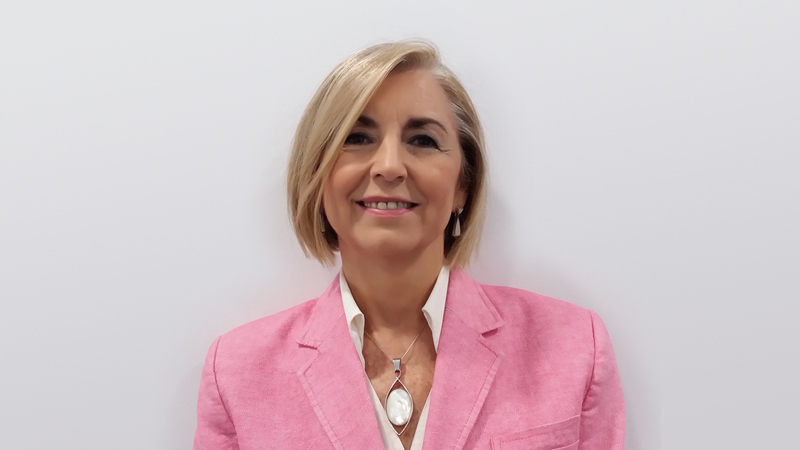
Carmen Alba Pastor: “Where there is diversity, education can’t be a straight line that everyone has to follow”
The goal of Universal Design for Learning (UDL) is to create an inclusive learning environment that promotes success for all students, removing barriers and providing personalized support based on individual needs. UDL doesn’t only benefit students with special educational needs; it improves the learning process for every student.
To explore Universal Design for Learning further, we hosted an online talk by Carmen Alba Pastor, PhD in Education, professor of Didactics and School Organization at the Complutense University of Madrid, and director of EducaDUA. In the online tekman Academy session Teaching in diversity: UDL strategies, part of the Learning difficulties webinar series, Carmen Alba Pastor gives a masterclass on inclusive education, from the foundations of UDL to current strategies to use in the classroom, always with the aim of motivating students and offering them multiple learning opportunities and experiences.
In this article, we’ve gathered some of the main ideas from the talk, but we recommend watching the full webinar, now available on our YouTube channel (in Spanish).
Teaching in diversity: UDL strategies, with Carmen Alba Pastor
- Universal Design for Learning (UDL) is key to addressing diversity in the classroom, allowing all students, regardless of their differences, to access learning effectively.
- UDL is a model organized around three principles: the affective component of learning, the perception and processing of information, and the expression of learning.
- Diversity is the norm: it includes different abilities, learning paces, and perceptual preferences, as well as linguistic, social, and cultural differences among students. After all, diversity in the classroom reflects society.
- As teachers, we need to give students multiple ways to participate and express themselves, recognizing that each person may have different ways of learning and communicating what they know.
- Let’s plan so our students can succeed: varying the supports, technologies, and timing, being flexible, creating groups, etc. We need to let go of the idea of one-size-fits-all teaching and adapt to each student’s needs and characteristics.
- Let’s start by motivating students! Success and motivation drive engagement in learning.
- Feedback should be given at the beginning, in the middle, and throughout the learning process, using different methods. If we save this information, which helps students reach the goal, until the very end, when all the effort has already been made, there is little room for improvement and it can lead to frustration.
- Collaboration among teaching teams and working together with schools is essential for implementing inclusive practices gradually and sustainably.
More information and resources on supporting diverse learners and inclusive education
Our Learning difficulties webinar series has featured several education experts. In addition to the UDL talk by Carmen Alba Pastor, Rafa Guerrero talked to us about ADHD in the classroom and Anna Sans Fitó shared tips for identifying our students’ learning difficulties (dyslexia, dyscalculia, DLD), and both made very clear how important a good diagnosis is. On the subject of inclusive education, we also recommend the fascinating interview with Gerardo Echeita. Don’t miss their webinars!
- How can you identify your students’ learning difficulties?, with Anna Sans Fitó
- What is ADHD, really? Strategies for the classroom, with Rafa Guerrero
- Inclusive education: teaching every student, with Gerardo Echeita
If you enjoyed Carmen Alba Pastor’s talk, don’t miss the 1st International Congress on Inclusive Education and Universal Design for Learning, taking place in Seville, Spain, from June 24 to 26, 2024.
