
Detecting and diagnosing learning difficulties: Ana Sanguinetti’s keys for the classroom
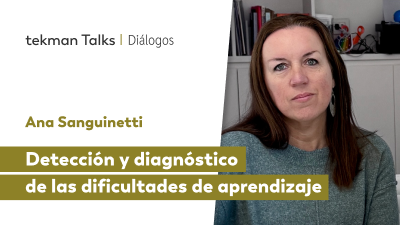
Detecting learning difficulties early is one of the biggest challenges teachers face every day. Direct classroom observation often raises reasonable questions: is this a lack of motivation, or is there something deeper? How can we tell a distracted student from one living with ADHD? And above all, what measures can we put in place today without waiting for a formal diagnosis?
To shed light on these questions, tekman Education turned to the expertise of Ana Sanguinetti, who holds a degree in educational psychology, is an expert in neuropsychology, works as a specialist at the TRIVIUM center, and teaches at the Open University of Catalonia (UOC). After 14 years in the learning disorders unit at Sant Joan de Déu Hospital, Sanguinetti helps us debunk deep-rooted myths and offers a practical, hopeful perspective for teachers and families.
Myths and realities about diagnosis at school
One of the most common obstacles to early intervention is the fear of labels. However, clinical reality shows a very different picture. An accurate diagnosis isn’t a limitation, but a tool for understanding and support.
Intelligence is no shield against difficulties
A common mistake is to rule out a disorder when a student is bright or excels in certain areas. Sanguinetti warns that most children with dyslexia, ADHD, or dyscalculia have average or above-average intelligence. In many cases, this cognitive ability lets them compensate for their difficulties in the early years, hiding the exhausting effort they make. When they can no longer keep up, they are often unfairly labeled “lazy” or “unmotivated,” when what is really going on is a neurobiological barrier.
The relief of naming the difficulty
Putting a name to what is happening in the learning process is, in the expert’s words, an act of liberation. Children without a diagnosis often already carry negative labels imposed by themselves or those around them (“I’m stupid,” “I’m slow”). Knowing that their brain works differently restores their self-esteem and allows families and teachers to map out a clear plan.
“A well-made clinical diagnosis doesn’t condemn, it frees: it allows students to understand that they’re not stupid, but that their brain processes information differently.”
What to do in the classroom: detection and flexibility
Diagnosing a learning difficulty doesn’t depend on a single magic test. It’s a complex clinical puzzle that involves looking at developmental history, school questionnaires, and neuropsychological tests. But what can teachers do while that puzzle is being put together?
Sanguinetti’s answer is clear: flexibility is the most powerful tool for inclusion. There’s no need to wait for an official protocol to make changes that actually benefit all students.
To create an accessible learning environment, we can apply these measures right away:
- Time management: allow more time on tests.
- Quality over quantity: reduce the number of repetitive exercises once the concept has been understood.
- Remove writing barriers: don’t make students with motor or reading and writing difficulties copy long instructions from the board.
- Positive reinforcement: value the process and sustained effort, not just the final result.
Learn more in tekman’s Inclusion Classroom
If you want to explore Ana Sanguinetti’s strategies in more depth and learn how to turn your classroom into a space where every student can shine, we invite you to join our Inclusion Classroom (in Spanish).
It’s a free, ever-growing library of resources designed to support you in the challenge of meeting diverse learners’ needs. When you sign up, you’ll get instant access to resources, guides, and specialized training.
Sign up for the Inclusion Classroom for free
Reading from Mexico? Access it here.
Reading from Ecuador? Access it here.