Don’t fear TIMSS: activities for observing students’ math competency
In the article Don’t fear TIMSS: what do the math results tell us and how can we improve them? we analyzed the data from the TIMSS 2023 report, including its trends, challenges, and proposals for improvement. Today, we put it into practice with real test items and show how we can work on them in the math classroom with EMAT.
What does TIMSS assess?
The IEA looks at the math performance of 4th grade students through the TIMSS assessment, which is organized around two dimensions:
The content dimension, which specifies the subject domains to be assessed:
- Number (50 %): whole numbers, fractions and decimals (tenths or hundredths), and expressions, simple equations, and relationships.
- Measurement and geometry (30 %): points, lines, and angles; two- and three-dimensional shapes.
- Data (20 %): reading, interpreting, and representing.
The cognitive dimension, which specifies the thinking processes to be assessed:
- Knowing (40 %): recalling, recognizing, classifying/ordering, computing, and measuring.
- Applying (40 %): determining (efficient/appropriate operations, strategies, and tools), representing/modeling, and implementing (applying strategies and operations).
- Reasoning (20 %): analyzing, integrating/synthesizing, evaluating, drawing conclusions, generalizing, and justifying.
So we can observe our students’ development of math competency through a systematic sequence of activities that combine both knowledge (basic knowledge) and cognitive processes (specific competencies) and take place in a real-life context, or in fictional but plausible situations, where math can be applied in different ways to solve problems.
How we prepare for TIMSS with EMAT
How can we observe students’ math competency in the classroom? Let’s look at some examples of the items TIMSS uses to observe student performance and how we work in the same way in math class with EMAT.
1. Real TIMSS item
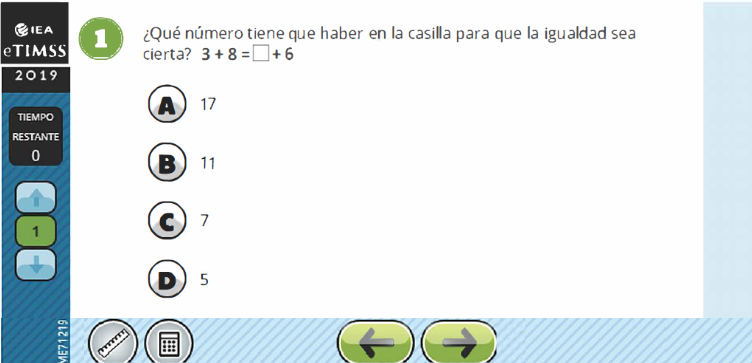
- Content domain: Number
- Topic area: Expressions, equations, and relationships
- Cognitive domain: Reasoning (Analyze)
- Response type: Multiple choice
- Maximum score: 1 point
- Correct answer: D
This item falls within the Number domain (Algebraic sense: Relationships and functions) and is a reasoning item, since it requires students to formulate and test simple conjectures by analyzing the relationships between numbers or numerical expressions (specific competency 3) in order to recognize equality as an expression of an equivalence relationship between two elements. They then have to use that relationship to find the missing number in the number sentence. The context of the item is mathematical, since all the elements belong to the world of math, so it falls within the academic context.
EMAT 2nd grade, session 7: I find the missing addends
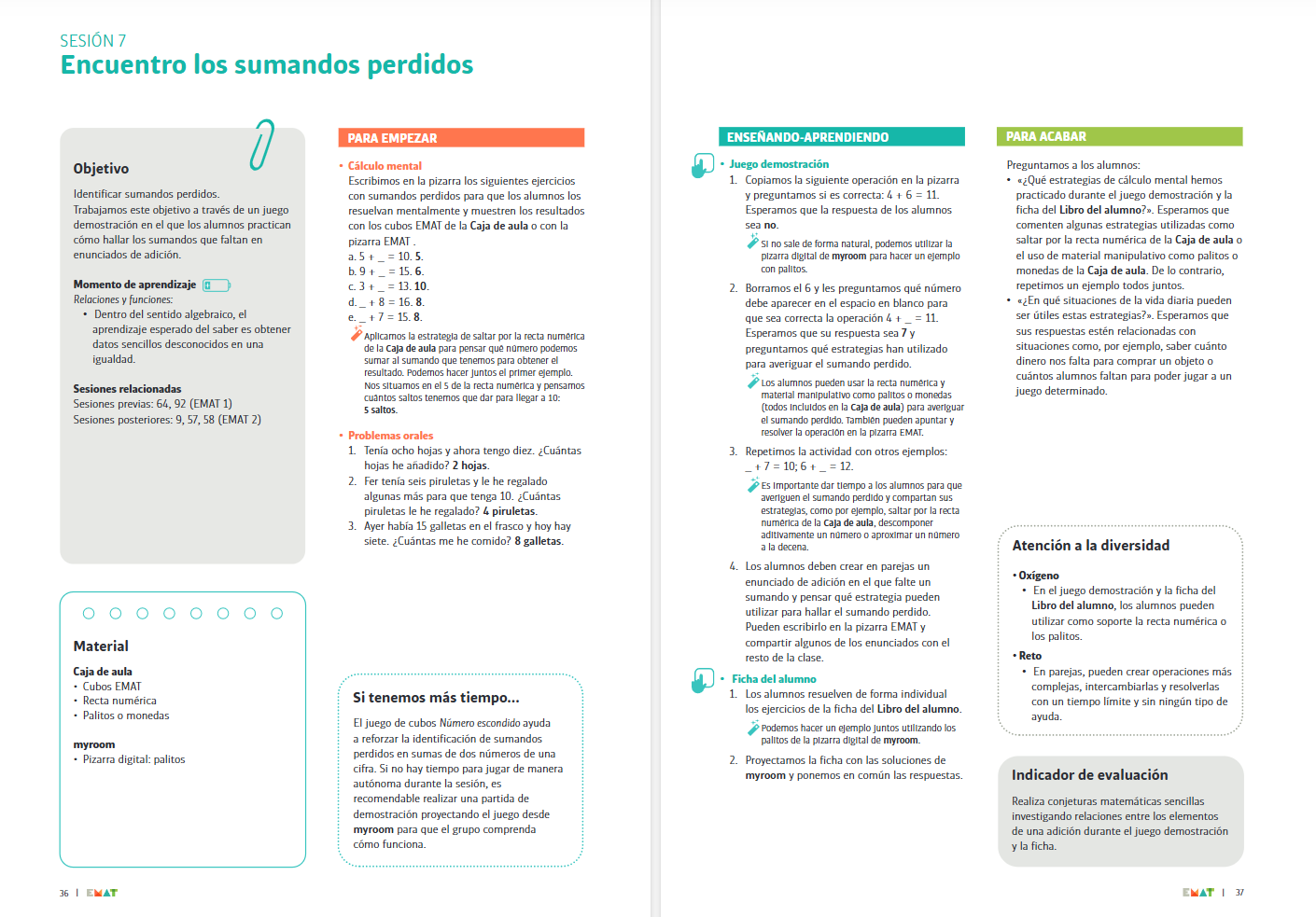
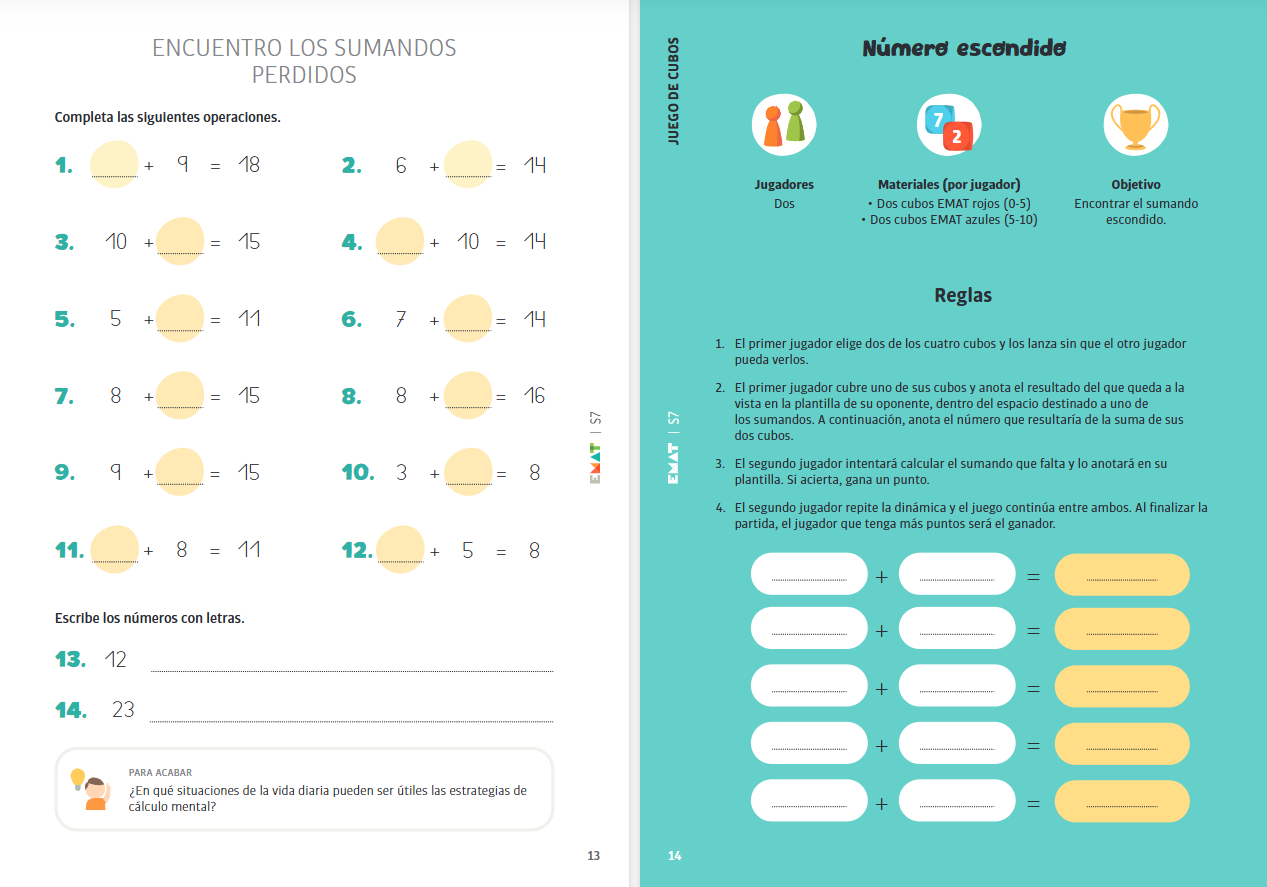
Each EMAT session is linked to specific basic knowledge (content domain)—in this case, Algebraic sense: Relationships and functions (Number)—and to competencies and criteria (cognitive domain). Through students’ performance on the different activities in this session, we can observe specific competency 3 through assessment criterion 3.1 (Reasoning, analyze), looking at students’ reasoning as they formulate and test simple conjectures with guidance, analyzing the equality relationship and using it to find the hidden or missing addend in different number sentences.
2. Real TIMSS item
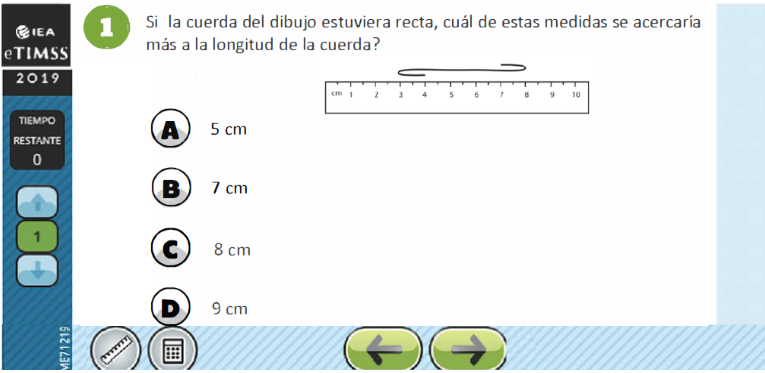
- Content domain: Measurement and geometry
- Topic area: Measurement
- Cognitive domain: Reasoning (Integrate)
- Response type: Multiple choice
- Maximum score: 1 point
- Correct answer: B
This item would fall within the Measurement and geometry domain (Measurement sense: Measuring). It is a reasoning item that requires students to recognize connections between different mathematical elements—the number line and a ruler (specific competency 5)—in order to recognize the relationship between the length between two points and subtraction on the number line.
Once again, the context of the item is mathematical, within the student’s academic context.
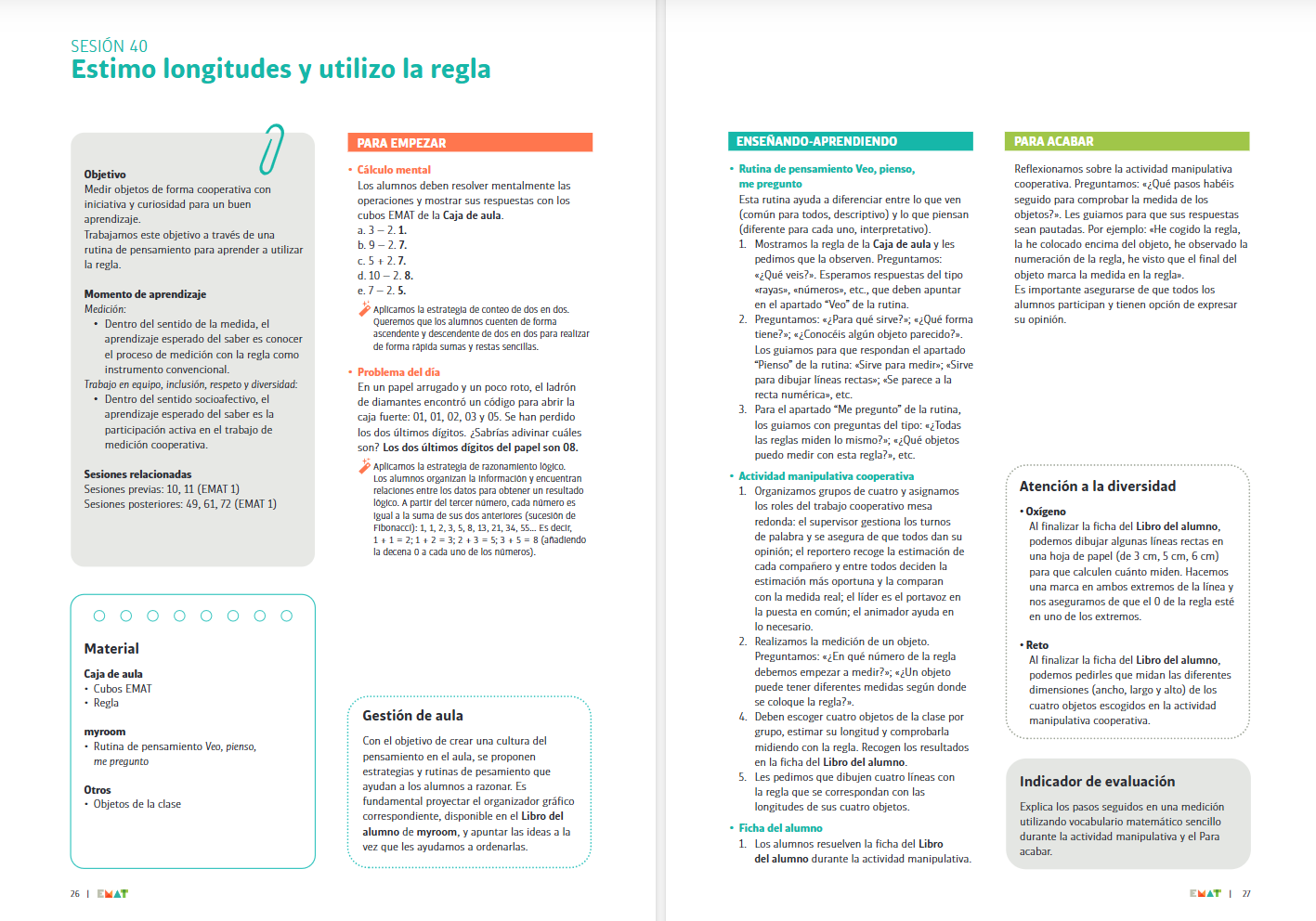
EMAT 1st grade, session 40: I estimate lengths and use a ruler
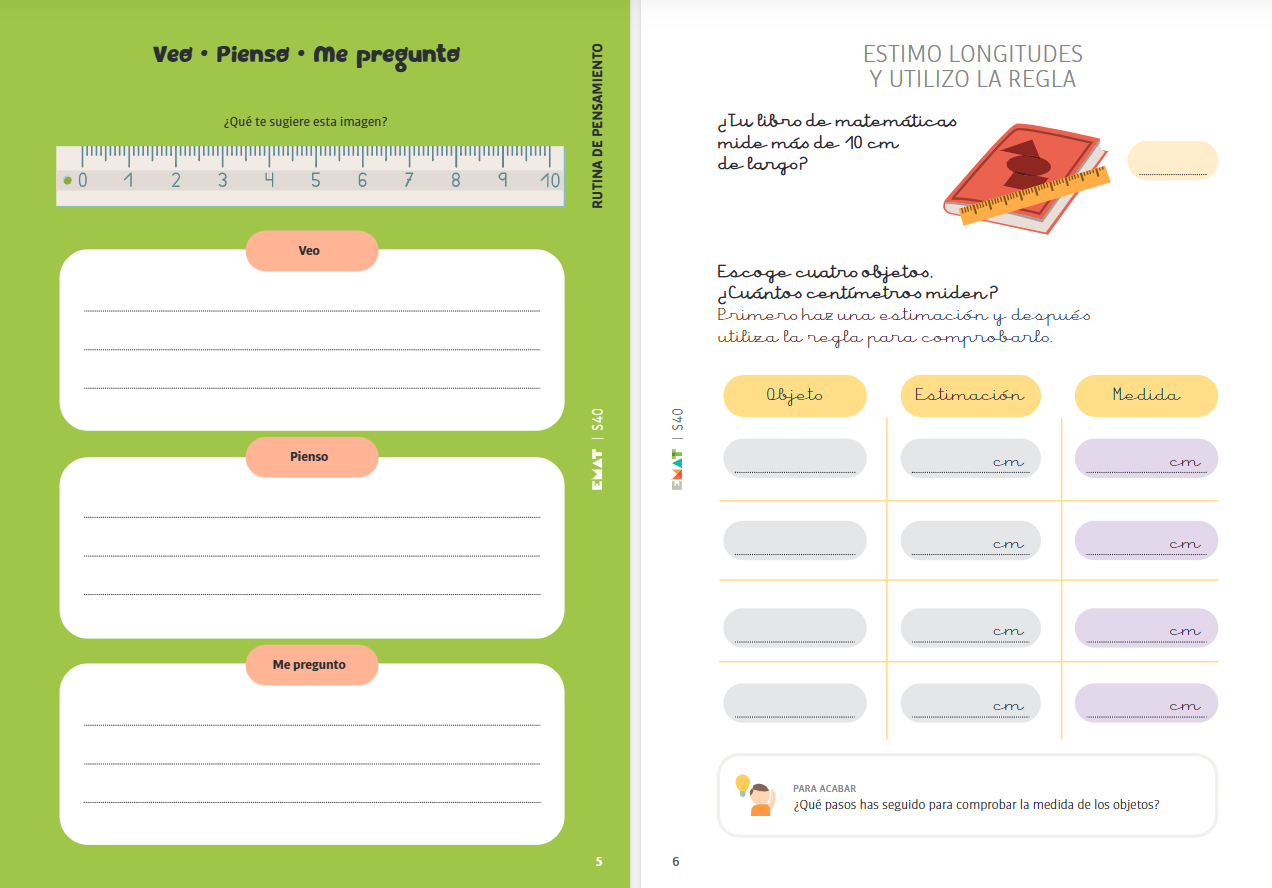
EMAT 1st grade, session 49: I measure lengths in centimeters
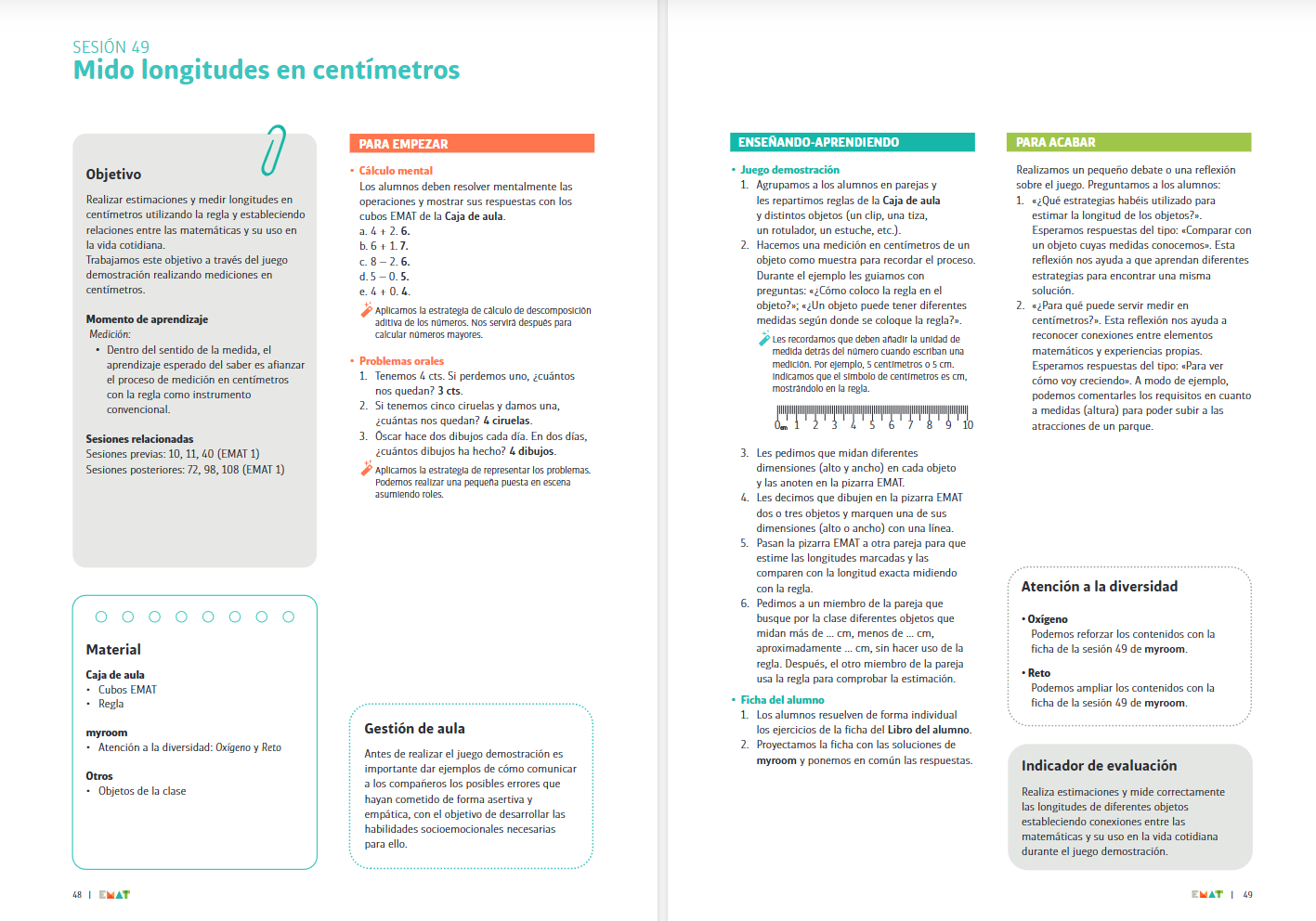
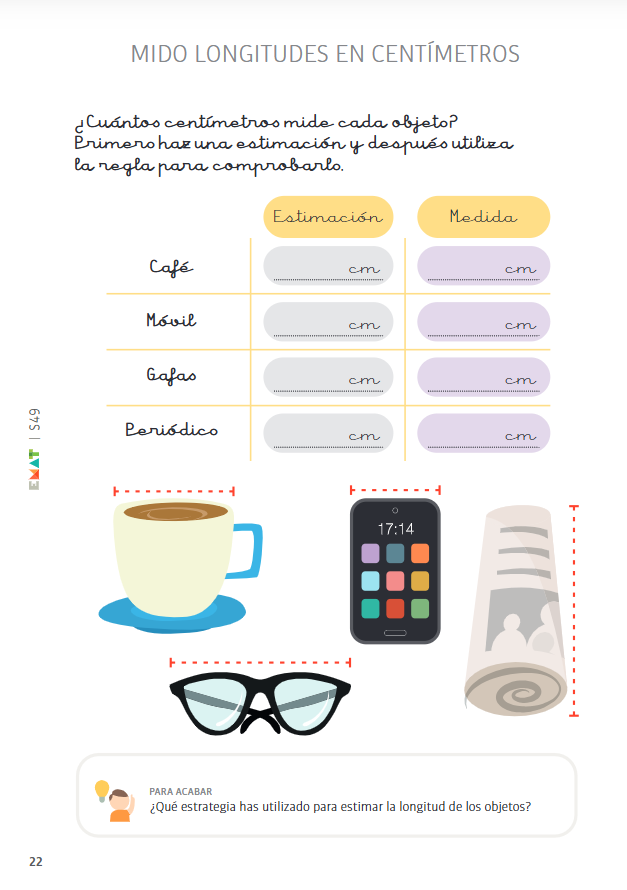
As we know, EMAT sessions are linked to specific basic knowledge (content domain)—in this case, Measurement sense: Measuring (Measurement and geometry)—and to competencies and criteria (cognitive domain). Through students’ performance on the different activities in this session, we can assess the specific competency through assessment criterion 5.2 (Reasoning, integrate), looking at students’ reasoning as they recognize the relationship between the length between two points and subtraction on the number line.
3. Real TIMSS item
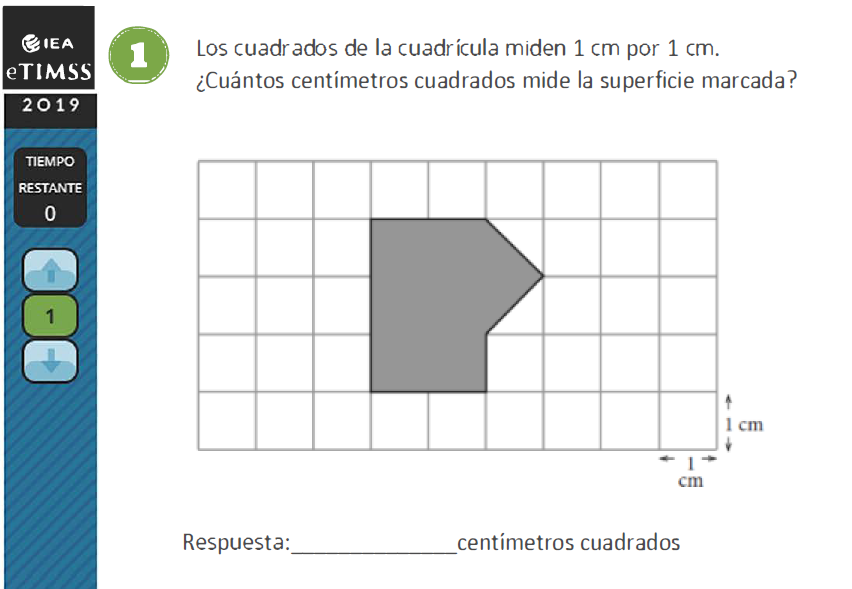
- Content domain: Measurement and geometry
- Topic area: Measurement
- Cognitive domain: Applying (Apply)
- Response type: Constructed response
- Maximum score: 1 point
- Correct answer: 7 square centimeters
This item falls within the Measurement and geometry domain (Measurement sense: Measuring) and is an applying item because it requires students to apply suitable problem-solving strategies (specific competency 5) to find the area of a shape covered with whole and partial squares. The context is mathematical, within the student’s academic context.
EMAT 3rd grade, session 3: I calculate areas by multiplying
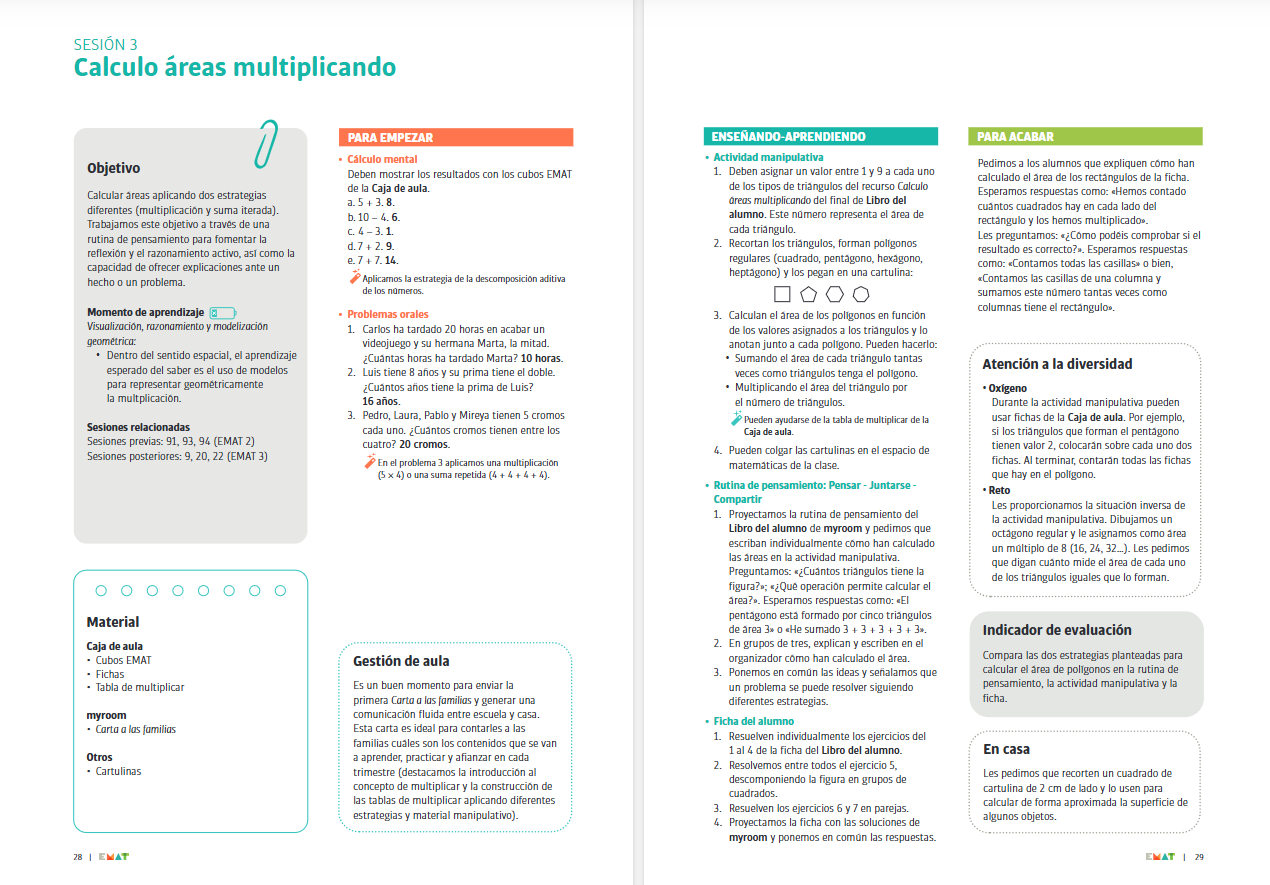
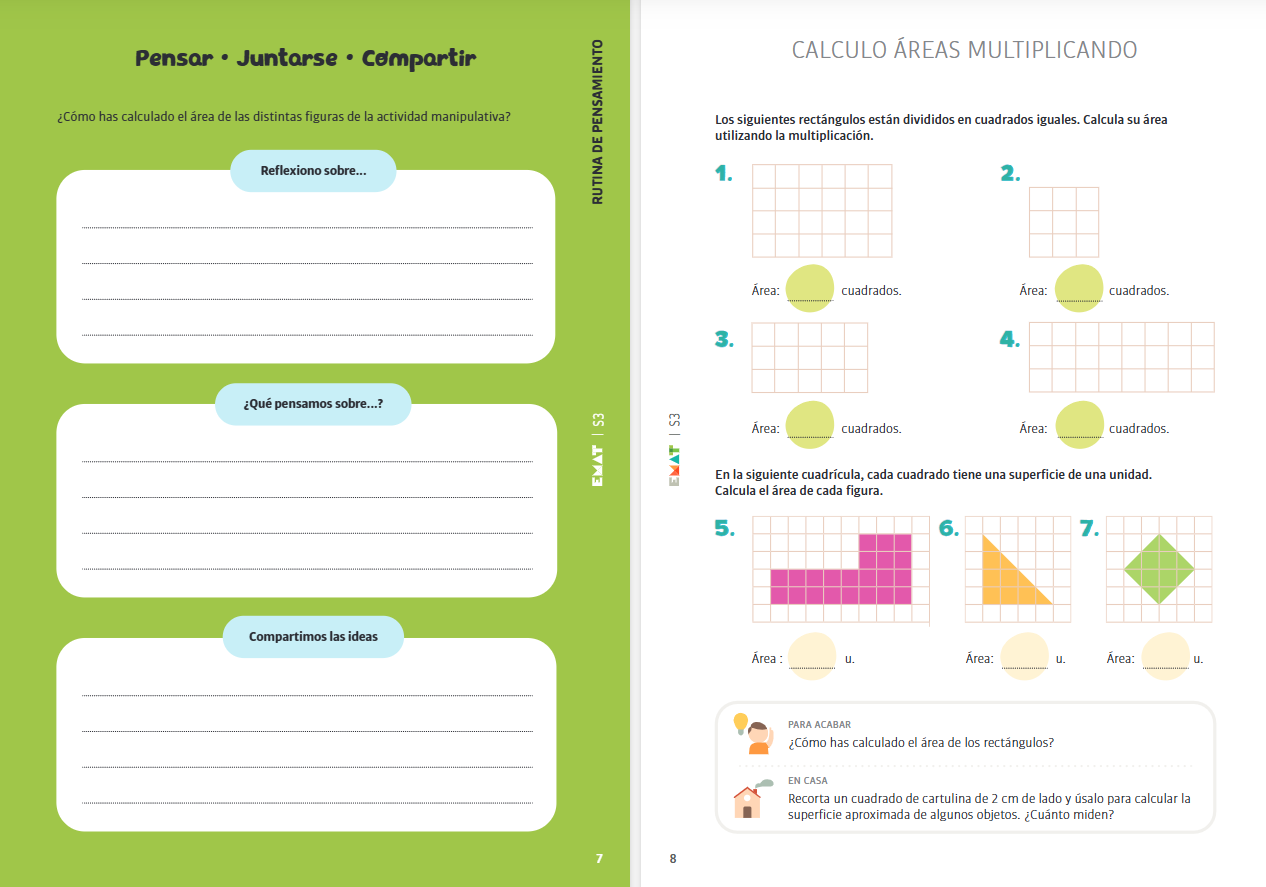
In this case, we’re working on Measurement sense: Measuring (Measurement and geometry) and on competencies and criteria (cognitive domain). Through students’ performance on the different activities in this session, we observe the specific competency through assessment criterion 2.1 (Applying, apply) by paying attention to the strategies students use to find the area of a shape covered with whole and partial squares.
Spain’s low performance in TIMSS shows the need to move away from traditional teaching. EMAT offers an innovative solution focused on competency-based learning and formative assessment. Every EMAT session is designed to observe student performance in real time, so teachers can adjust their teaching and improve students’ understanding.
Through learning situations and real-world activities, EMAT not only teaches math content but also builds reasoning, problem-solving, and mathematical communication skills, in line with international assessment standards such as TIMSS.
Discover EMAT, the math program that delivers results:
Don’t miss this related content:
- PISA tests: competency-based teaching strategies to improve reading comprehension
- PISA tests: how to teach and practice math to improve results
- Don’t fear TIMSS: what do the math results tell us and how can we improve them?