
Real-world math: the bridge between the classroom and real life

Learning math becomes a challenge when students can’t see its usefulness beyond the final test. This disconnect leads to a lack of motivation and makes abstract concepts harder to understand. If learning isn’t anchored in reality, students end up memorizing formulas they’ll soon forget. Want to see how we bring math into real-world contexts in EMAT?
What is real-world math?
Real-world (contextualized) math is a teaching approach that presents number, geometry, and statistics concepts within everyday situations or settings that are meaningful to students. Instead of solving isolated operations, students use logical thinking to solve real problems, which makes it easier to transfer knowledge and develop key competencies.
The challenge of teaching math today
Many math teachers face the same question in class every day: What’s the point of this? We see students tune out, lose interest, or simply memorize formulas they’ll forget after the test because they don’t see any use in what they’re learning. This lack of motivation often turns into an emotional barrier toward the subject that makes teaching harder.
The pressure to cover the curriculum and the need to support diverse learners often leave no time to design learning situations that really engage students. The secret to changing this dynamic isn’t to teach more content, but to teach it differently.
The key is to bring abstract concepts into your students’ reality. When numbers stop being just symbols on a board and become tools for designing a park or calculating the budget for a trip, the attitude in class changes completely.
The benefits of meaningful learning
Real-world math is a powerful tool for cognitive development and classroom management. When learning has a clear, practical purpose, the brain engages differently, helping students move from rote memorization to deep, meaningful understanding.
- Encourages critical thinking: students must analyze the situation before choosing a problem-solving strategy.
- Boosts motivation: when students see the direct usefulness of what they’re learning, they’re more committed to the activity.
- Improves communication skills: explaining the problem-solving process helps structure logical and abstract thinking.
- Prepares students for life: it builds skills they’ll need in adulthood and in their careers.
Math only truly makes sense when students discover that it’s the language that explains the world around them
EMAT: math for real life
At tekman Education, we know that competency-based learning is at the heart of modern education. That’s why our EMAT program offers a journey from hands-on manipulation to abstraction across Early Childhood, Primary, and Secondary.
EMAT uses real-world math to drive learning through:
Meaningful learning in Early Childhood
The program offers challenges in which mathematical intuition, hands-on manipulation, and everyday situations are the keys to building first learning through exploration and experience.
Want to see it come to life in the classroom?
Don’t miss this real example of an activity from EMAT Early Childhood (in Spanish)

Applying math to real life in Primary
The program offers challenges in which hands-on manipulation, reflection, and learning situations based on real problems are the keys to applying knowledge, solving challenges, and developing math competencies in everyday life.
Shall we see it in action?
Watch this example of an activity from EMAT Primary (in Spanish)
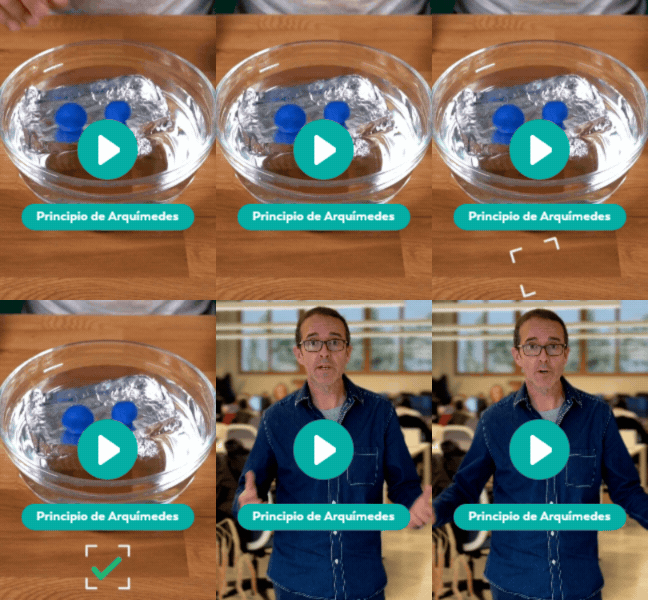
Understanding projects in Secondary
In secondary school, the program offers challenges in which math (arithmetic, algebra, geometry, or statistics) is the key to finding solutions to real problems.
Shall we see it applied to the real world?
Take a look at this example from EMAT Secondary (in Spanish)

Bringing math into real-world contexts allows teachers to stop being mere transmitters of formulas and become learning guides, reducing stress in the classroom and improving academic results.
Want to transform your math classes and motivate your students from the very first minute?
Discover how EMAT brings real-world math into your classroom
Frequently asked questions
1. How does real-world math affect assessment?
It allows richer formative assessment, because you as a teacher can observe not only the final result but also the reasoning process, creativity in the solution, and the ability to apply what has been learned in new contexts, as required by the curriculum under the LOMLOE (Spain’s education law).
2. Can abstract content like algebra be taught in real-world contexts?
Yes. Algebra can be introduced by modeling real situations, such as calculating rates, computer programming, or architecture, which helps students understand a variable as a representation of reality.
3. What materials do you need to teach math in real-world contexts?
It’s essential to have hands-on materials and digital resources that allow experimentation. Programs like EMAT provide the whole ecosystem teachers need, so they don’t have to spend extra time creating these materials from scratch.