
TALIS 2024 report: what it reveals about teaching in Spain
The TALIS 2024 report offers the most up-to-date and detailed picture of how teachers in Spain work and feel. This edition included elementary and secondary teachers and principals, providing a clear inside view of the Spanish education system: how work is organized in schools, the main sources of job satisfaction, the factors that cause the most stress, and how teachers experience growing diversity in the classroom.
Below, we review the most important findings of the TALIS 2024 report.
Job satisfaction: what teachers value most
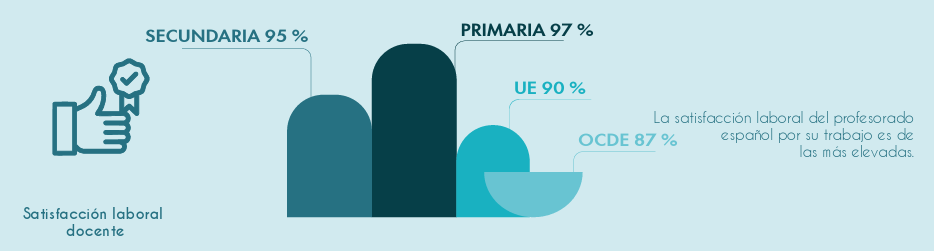
The TALIS 2024 report shows that, despite daily challenges, Spanish teachers are highly satisfied with their work. According to the data, 97 % of elementary teachers and 95 % of secondary teachers say they are happy with their jobs. These figures are above the OECD average (87 %) and the EU average (90 %), placing Spain among the countries with the highest teacher satisfaction.
Source: TALIS 2024 report, Teaching and Learning International Survey, Spanish report.
Teachers also value their autonomy to make decisions about planning, methods, and learning activities, which TALIS 2024 highlights as a strength of the Spanish system.
Even so, the report also points to challenges that can affect teacher well-being: administrative workload, managing diversity, and maintaining a positive classroom climate. Recognizing what teachers value and what puts them under pressure helps shape better policies, professional learning, and school support so that job satisfaction remains high and sustainable.
Diversity and teacher training: a challenge that calls for support
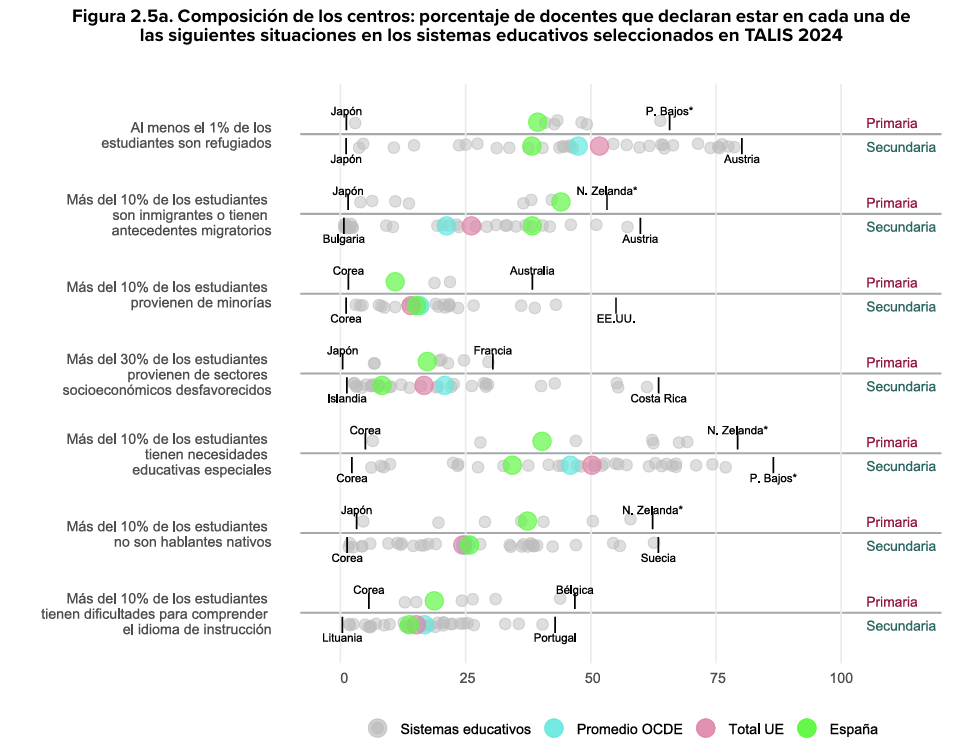
The TALIS 2024 report confirms that diversity is a growing reality in Spanish classrooms. 26 % of secondary teachers work in schools where more than 10 % of students speak a first language other than the language of instruction, and 34 % work in schools where more than 10 % of students have special educational needs.
Source: TALIS 2024 report, Teaching and Learning International Survey, Spanish report.
This diversity poses clear challenges:
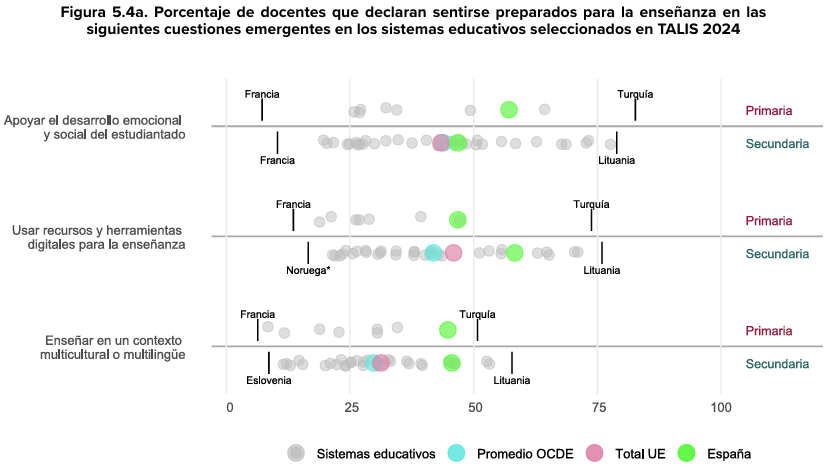
1. More than 50 % say they don’t feel prepared to teach in multicultural or multilingual settings.
Source: TALIS 2024 report, Teaching and Learning International Survey, Spanish report.
2. 40 % of secondary teachers and 42 % of elementary teachers report feeling stressed about meeting the needs of students with special educational needs. This additional burden adds to other day-to-day pressures and connects directly to one of the report’s central themes: teacher stress, which we look at in the next section.
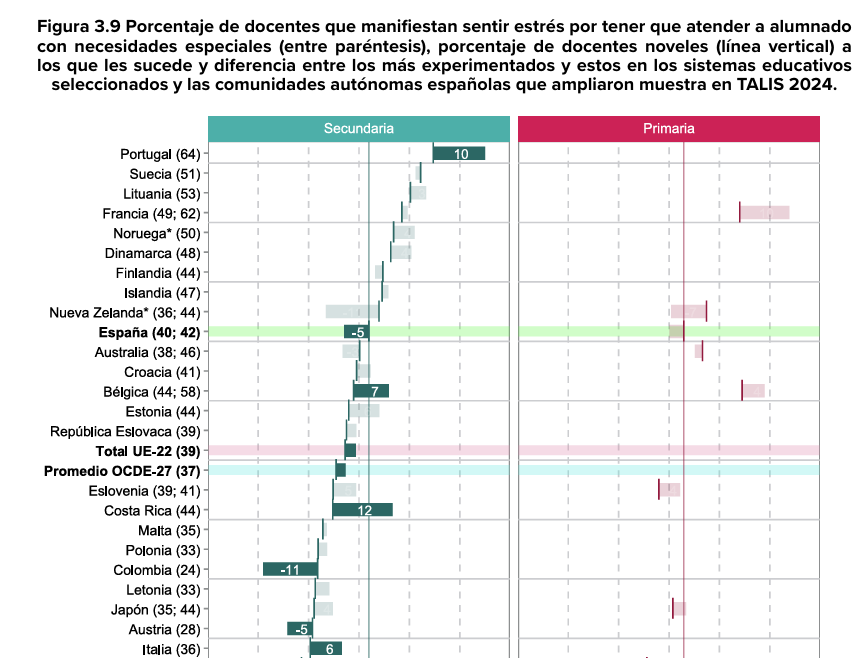
Source: TALIS 2024 report, Teaching and Learning International Survey, Spanish report.
Teacher stress: the less visible side of the profession
Although Spanish teachers report high levels of satisfaction, TALIS 2024 clearly shows the main sources of day-to-day stress. The most prominent is administrative workload, cited by 60 % of elementary teachers and 64 % of secondary teachers—notably higher than the international average.
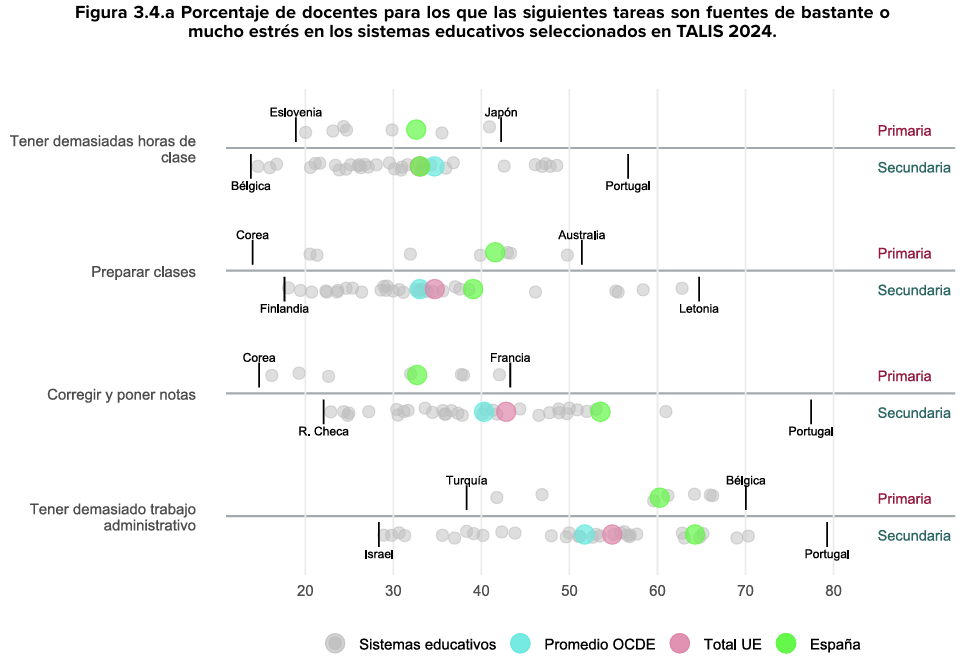
Source: TALIS 2024 report, Teaching and Learning International Survey, Spanish report.
Other pressures add to this: too many teaching hours, constant lesson preparation, grading, and assessment. All of this feeds the common feeling of “never getting everything done.”
Even so, TALIS 2024 reveals something very positive: despite these challenges, job satisfaction remains very high, reflecting teachers’ strong commitment and resilience.
This picture shows how important it is to provide real support, adequate resources, and ongoing professional learning, not only to improve teaching practice but also to protect teachers’ emotional well-being.
👉 We explore this topic further in our Instagram reel on teacher stress and professional well-being (in Spanish).
Technology and AI: opportunities with the right training
The TALIS 2024 report confirms that AI is starting to have a real presence in Spanish classrooms. One in three secondary teachers (35 %) regularly uses this tool, in line with the OECD average. In elementary school, the figure is lower but significant: 28 % of teachers already use AI in their daily practice.
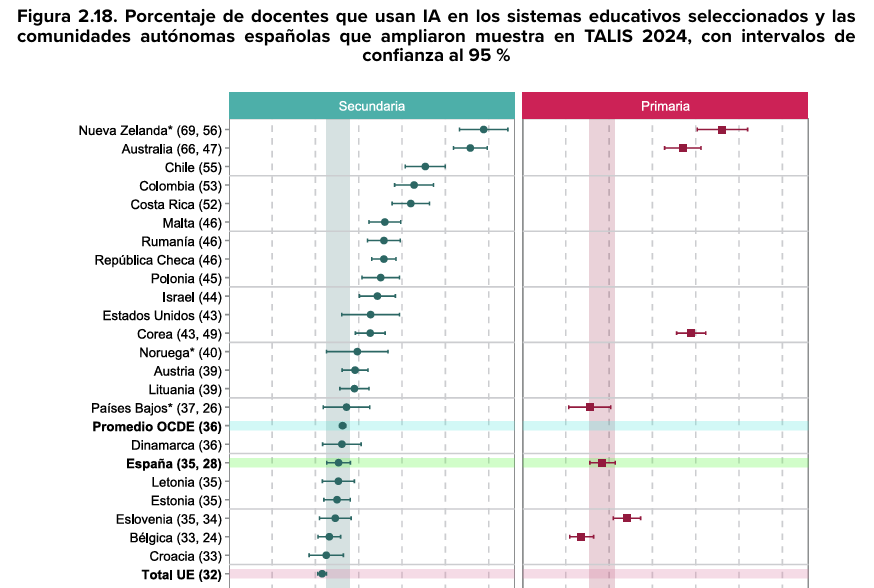
Source: TALIS 2024 report, Teaching and Learning International Survey, Spanish report.
However, this adoption comes with a clear demand for training. Artificial intelligence is the top professional learning need expressed by teachers:
- 30 % in secondary
- 32 % in elementary
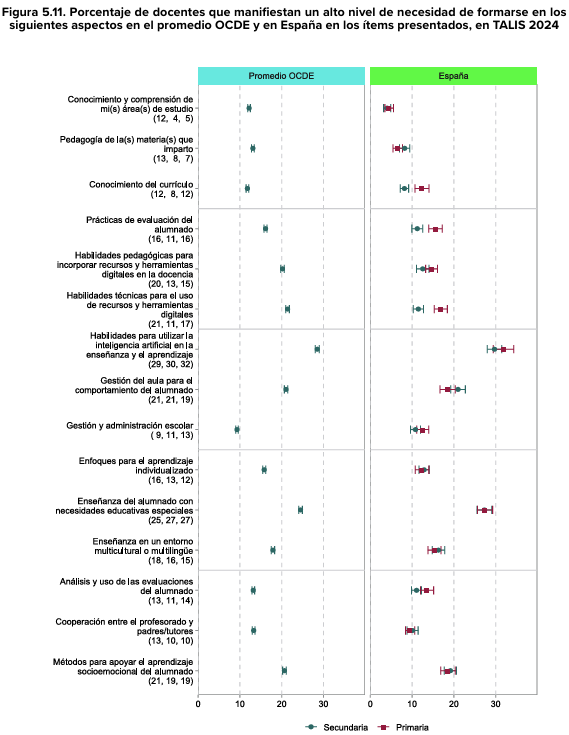
Source: TALIS 2024 report, Teaching and Learning International Survey, Spanish report.
The data show that AI is already in the classroom, but its use for teaching still needs support, guidance, and practical training to become a truly useful tool.
👉 Check out our Instagram reel on AI in education for more tips and examples (in Spanish).
Final thoughts
The TALIS 2024 report paints a clear picture of teaching in Spain: teachers who are very satisfied with their work, deeply committed to their students, and resilient in the face of daily challenges. At the same time, it highlights key areas that need attention:
- administrative workload
- managing diversity
- the need for ongoing professional learning
- the effective integration of new technologies and AI
Committing to education policies that reduce unnecessary burdens, strengthen support in schools, and offer useful, practical professional learning is essential to keep building an education system that takes care of the people who make it possible: its teachers.