
“There is a passion for ignorance, which has a lot to do with the loss of narrative capacity”: Lola López Mondéjar and her essay on society
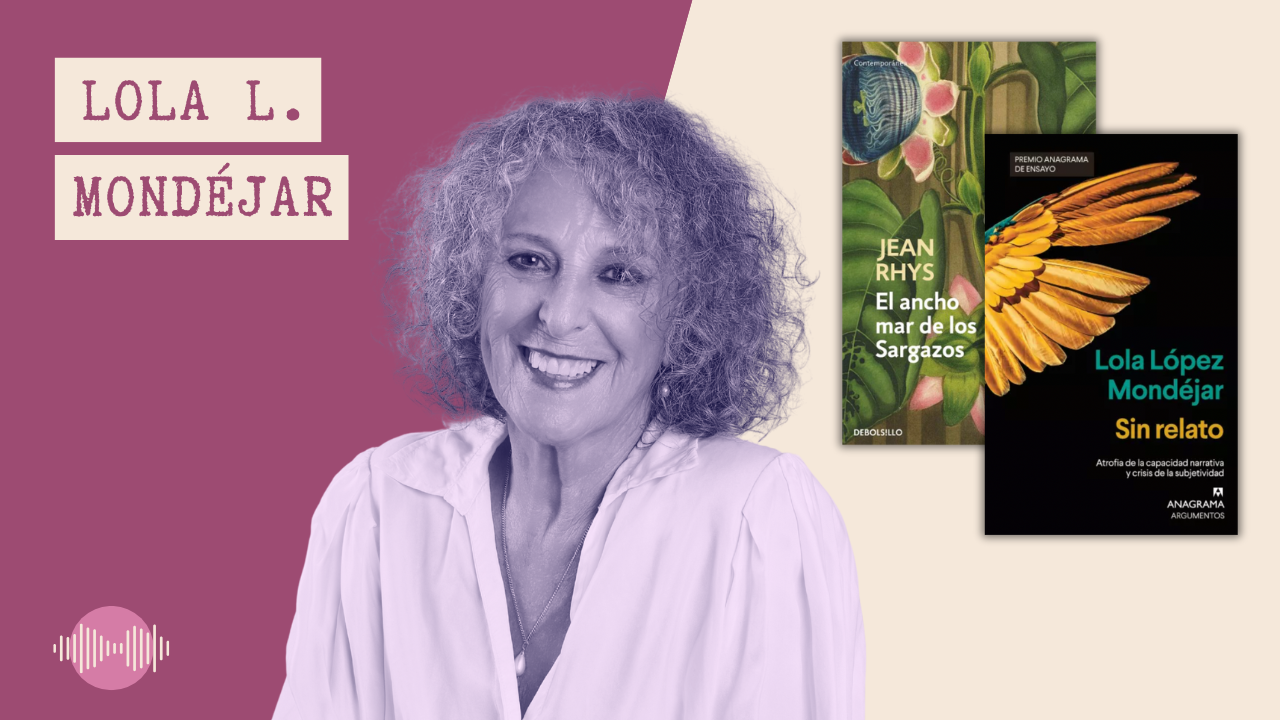
“There is a passion for ignorance, which has a lot to do with the loss of narrative capacity.” This powerful statement opens a new episode of Secretos a Voces (in Spanish), in which Lea Del Pozo interviews psychoanalyst and writer Lola López Mondéjar about her essay Sin relato. Atrofia de la capacidad narrativa y crisis de la subjetividad (Without a Story: The Atrophy of Narrative Capacity and the Crisis of Subjectivity), winner of the 2024 Anagrama Essay Prize.
López Mondéjar offers a critical, lucid look at today’s society, in which we live surrounded by stimuli but are increasingly unable to tell our own story, to narrate who we are. What happens when we lose that ability? The result, she tells us, is a deep crisis of subjectivity.
A cultural diagnosis from psychoanalysis
This sharp, uncomfortable essay combines philosophy, sociology, and psychoanalysis to sound an alarm: we are losing the story of our lives.
López Mondéjar diagnoses a postmodern society in which objects multiply while meaning fades away. We become empty individuals, lacking self-awareness and empathy. The author points out that this atrophy of narrative is no accident, but a symptom of a deeper malaise:
“Be careful. Without a story, we are at risk.”
Wide Sargasso Sea: when literature restores the lost story
Lola López Mondéjar chose Jean Rhys’s Wide Sargasso Sea as her literary classic. This novel retells, from a different perspective—that of madness, of the silenced—the story of Bertha Mason, the woman locked in the attic in Jane Eyre.
Rhys gives a voice to a marginalized woman and forces us to rethink inherited narratives: Who tells the story? From where is it told? What happens when a life is left out of the official account? For López Mondéjar, this novel is a powerful example of how literature can restore subjectivity to those who have been stripped of it.
Identity, normopathy, and psychoanalysis on Secretos a Voces
During the interview with Lea del Pozo, the conversation branches out into key topics in contemporary thought:
- Excessive identity and identity-based movements.
- Normopathy, that pathological normality that lulls us to sleep.
- The lost patriarchal “grand identity.”
- Narrative medicine.
- Psychoanalysis as a narrative tool.
- The lack of subjectivity.
- Environmentalism and feminism as guarantors of democracy.
About the author: Lola López Mondéjar
Lola López Mondéjar (Madrid, 1958) is a clinical psychologist, psychoanalyst, and writer. She has built an extensive professional and literary career, combining psychological analysis and critical thinking with a deep narrative calling. She is the author of many novels, such as Cada noche, cada noche (Every Night, Every Night), Mi amor desgraciado (My Unhappy Love), and Qué mundo tan maravilloso (What a Wonderful World), as well as several collections of short stories and essays that explore subjectivity, identity, and women’s experience from a psychoanalytic and literary perspective.
López Mondéjar also writes articles and is a regular speaker on mental health, feminism, and contemporary culture. Her work is recognized for its ability to think about the present without oversimplifying, and her latest book, Sin relato. Atrofia de la capacidad narrativa y crisis de la subjetividad, won the 2024 Anagrama Essay Prize.
With a distinctive, critical, and always lucid voice, her work invites us to question ourselves, to tell our own stories better, and to defend the value of subjectivity in an increasingly depersonalized world.
About the classic Wide Sargasso Sea by Jean Rhys
This episode takes us back to rediscover a classic: Wide Sargasso Sea by Jean Rhys. Published in 1966, this novel gives a voice to a character silenced by the literary canon: Bertha Mason, the woman locked in the attic in Charlotte Brontë’s Jane Eyre.
Rhys writes a prequel from the perspective of the Caribbean “madwoman,” turning her into Antoinette Cosway, a young Creole woman whose identity gradually dissolves amid colonial life, madness, and British cultural imposition. The book is a fierce critique of colonialism, patriarchy, and the structural violence that erases subjectivities. López Mondéjar’s choice of this text is no coincidence: it connects deeply with her essay Sin relato. Both works explore what happens when we are left without a story of our own, when we lose the ability to narrate ourselves from within and are left at the mercy of other people’s stories.
Listen to or watch the full episode
If you’re interested in reflections on subjectivity, narrative, and the place of the individual in today’s world, this episode is for you. You can listen on your favorite platform or watch it on our YouTube channel (in Spanish):
Listen to the episode on Spotify.
Watch the episode on YouTube
Subscribe to the newsletter and follow us to stay up to date on every new episode.
If you love literature and enjoy discovering writers’ motivations and thoughts, Secretos a Voces is for you. A new podcast episode every two weeks! And you’ll find more literature on the Secretos a voces Instagram account.
Don’t miss this related content:
- Secretos a voces, Lea del Pozo’s new literary podcast
- Episode 1: Cristina Andrade on Secretos a voces
- Episode 2: Jesús A. Ponce on Secretos a voces
- Episode 3: Roque Larraquy on Secretos a voces
